 Call us: +233244806015
  Email us

Malaria Clinical Trials Alliance (MCTA) is a strategic research collaboration designed to strengthen the capacity of institutions conducting malaria clinical trials. This is a US$17,045,956 project funded by the Bill & Melinda Gates Foundation. The alliance supports standardized research practices, ethical compliance, and high-quality data generation across malaria-endemic regions.
The Malaria Clinical Trials Alliance, established in 2006 as a key project of the INDEPTH Network with funding from the Bill & Melinda Gates Foundation, has been championing clinical trials capacity development in Africa to conduct the largest phase III malarial vaccine trial.
The main objectives of MCTA are:
- To facilitate the development of sufficient near-term research capacity in Africa for the conduct of Good Clinical Practice (GCP) – compliant malaria drug and vaccine clinical trials.
- To support, strengthen, mentor, and network trial centres to facilitate their progression towards self-sustaining clinical research centres.
During the project period 2006-2011 these objectives were achieved through an interactive approach with centre assessment visits using standard questionnaire to determine infrastructural and human capacity at the centres and whether these were Good Clinical Practice (GCP) compliant. Emphasis was placed on major support to the centres in the area of clinical facility refurbishment to facilitate recruitment of participants, laboratory facilities and strategic plan mentorship.
There was interaction with the research team on the ground to understand the areas that require support and which most sponsors of clinical trials would not want to invest in especially “Brick and Mortar” and major laboratory equipment.
A total of ten centres: Kombewa, Kilifi, Korogwe, Bagamoyo, Manhica, Nanoro, Kintampo, Lambarene, UCAD and Lilongwe received support in the area of clinical trials facilities, recruitment centres, laboratory facilities, dispensaries/health centres, and GCP regulatory compliant units for regulatory issues and monitoring. They were also assisted to better document their financial management systems
including provision of softwares and partial support for auditing. Major support was given to eleven centres to build archiving blocks. This was in response to the need for GCP compliant long-term storage facilities for case record forms at the centres where major trials were being conducted. Ultra modern digital x-ray machines with all the necessary accessories were also donated and were operational at all the 11 centres involved in the RTS, S Phase III malarial vaccine trial. This was meant to improve the diagnosis of severely ill children both for
clinical trials and routine health care.
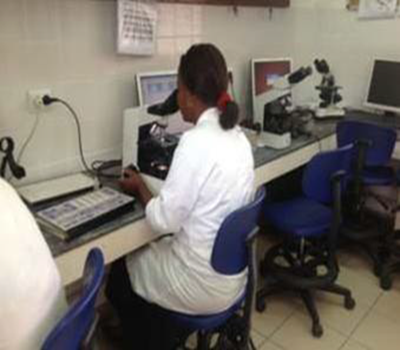
A series of networking and training activities including GCP and microscopy workshops as well as Accreditation Programmes for Senior Research staff (ACRP) to get more certified research scientists were successfully implemented. Web-based for a were created to facilitate discussions among the teams involved on the use of major equipment related to radiology, clinical trials and microbiology and maintenance of laboratory equipment. This was mainly to strengthen the infrastructure capability and improve experience sharing of equipments at the
various centres.
Exchange programmes were made possible through MCTA short-term fellowships granted to research scientists to visit other centres and know more about different clinical trials and laboratory techniques used by colleagues.
A mentorship programme comprising senior scientists with experience in centre development was initiated with at least seven centres, including Korogwe, Agogo, Kintampo, Kisumu-Kombewa, Kisumu-Siaya and UCAD all benefitting from the programme.
For long-term sustainability, at least twelve centres on the platform developed strategic plans with support from MCTA. Six centres received partial support for their strategic plans to develop phase l/Il facilities to conduct early phase clinical trials. Two additional centres that had
done a lot of work in malaria research in sub-Saharan Africa received strategic support for infrastructural upgrading for biomedical
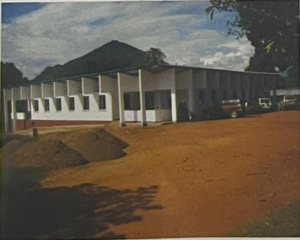
research. This has helped to strengthen the number of centres in Africa and position them to move to MCTA constructs and equips Korogwe the next phase of the laboratory in Tanzania for clinical trials programme (contributing to the development of new tools and malaria research
agenda towards elimination and eradication).
To enhance visibility of the centres in the African region and beyond, MCTA collaborated with the African Media and Malaria Research Network (AMMREN). AMMREN therefore visited and interacted with research scientists at the various centres to understand their work and communicate the information to the public.
AMMREN journalists took advantage of the visits to produce a documentary for screening to stakeholders and the public. This strategy helped to better articulate the work and research findings of MCTA to communities and policy makers. More than sixty journalists benefitted from training programmes on scientific reporting through the support provided by MCTA to AMMREN.
Useful lessons were learnt at the close of the first phase of MCTA. The success story of MCTA has proved that with limited resources but with clearly guided infrastructural development and improved human capacity much success can be recorded at centres in sub-Saharan Africa to contribute to the development of new drugs, vaccines and tools to combat the major diseases on the continent MCTA’s second phase could leverage this capacity to continue to provide facilities for clinical trials and also contribute to the malaria elimination and eradication
agenda of Africa by providing the much needed epidemiology transition data. The next phase could also create the platform for the evaluation and monitoring of the impact of malaria eradication strategies.